
Termite Swarms Are Starting - Here Is What That Means for Your Home
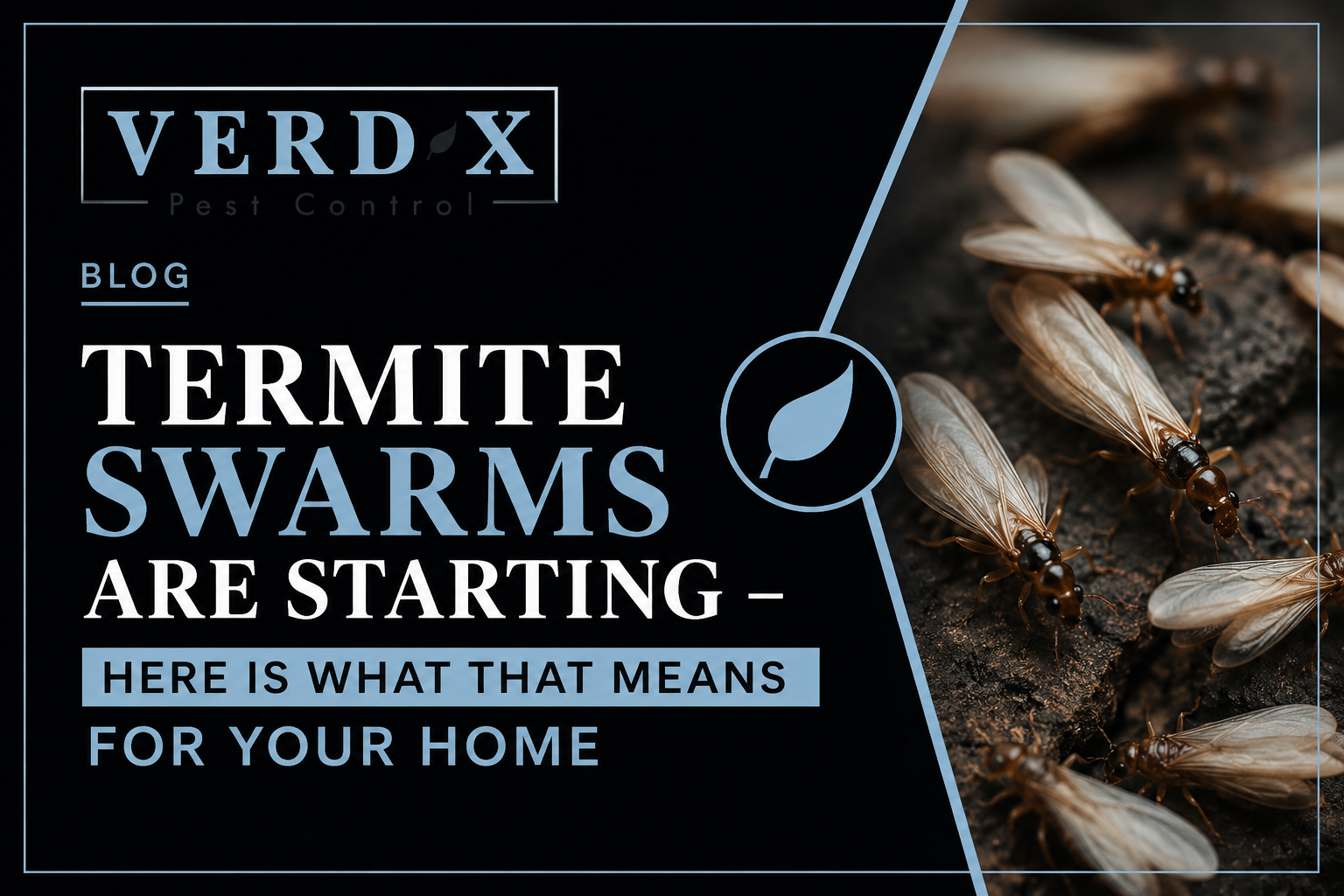
If you have stepped outside recently and noticed a cloud of winged insects swirling near your porch light, windowsill, or foundation, do not brush it off as a harmless springtime nuisance. What you are likely witnessing is one of the most expensive warnings your home can give you. Termite swarm season is here, and for homeowners across Georgia, that means it is time to pay close attention.
Every year, as temperatures climb and spring rains roll in, termite colonies that have been quietly feeding through the winter reach a tipping point. They send out swarmers — winged reproductive termites whose sole job is to leave the nest, find a mate, and start a brand new colony. The swarm itself lasts only a matter of minutes, but what it signals can mean thousands of dollars in structural damage if left unaddressed. A professional termite inspection early in the season can be the difference between a manageable treatment and a costly structural repair.
What Is a Termite Swarm and Why Does It Happen?
A termite swarm is not the termites attacking your home. It is a reproductive event. When a subterranean termite colony matures, typically after three to five years of growth, it produces alates — winged males and females that are released en masse to expand the species. These swarmers pour out from the ground or from wood structures, take flight, pair off, shed their wings, and attempt to establish new colonies nearby.
The swarm itself is brief. Most last fewer than 30 minutes. But finding a pile of discarded wings near your windowsill or on the floor inside your home is just as alarming as watching the swarm happen live. It tells you that a mature, well-established colony is operating somewhere close — and that it has been feeding, likely for years, before you ever noticed a single sign. If you have seen this, schedule a termite inspection with VerdX before the damage goes any further.
Why Georgia Homeowners Face an Especially High Risk
Georgia sits squarely within what pest control professionals call the termite belt — the band of Southern states where warm temperatures, high humidity, and abundant rainfall create near-perfect conditions for termite activity year-round. While homeowners in northern states may get a break from termite pressure during freezing winters, Georgia's soil rarely freezes deep enough to interrupt colony activity.
The result is a threat that never fully pauses. Worker termites feed continuously through fall and winter. By the time termite swarm season arrives in late winter and spring, those colonies have had months of undetected feeding time already logged against your home's structure. That is why year-round termite protection in Georgia is not optional for most homeowners — it is essential.
The dominant species in Georgia are Eastern subterranean termites and Formosan termites. Eastern subterranean termites typically swarm during daylight hours, often on the first warm, sunny day following a rain event — exactly the kind of weather Georgia sees frequently between February and May. Formosan termites, an invasive and particularly aggressive species, tend to swarm in the evening hours and are capable of causing damage at a significantly faster rate. If you own property in the Atlanta metro area, including Marietta, Alpharetta, Buckhead, Roswell, or Norcross, you are in one of the most termite-active zones in the country. VerdX Pest Control's Atlanta termite services cover these high-risk neighborhoods directly.
Termite Swarmers vs. Flying Ants: How to Tell the Difference
One of the most common mistakes homeowners make during termite swarm season is assuming that what they see are flying ants. Both insects swarm, both can appear near light sources, and both can shed wings. The distinction matters enormously — because one signals a structural threat that demands immediate professional pest control, while the other is largely a cosmetic nuisance.
Here is how to tell them apart:
Wings: Termite swarmers have two pairs of wings that are equal in length, often longer than the body itself. Flying ants have unequal wings, with the front pair noticeably larger than the rear.
Waist: Termites have a broad, straight waist. Ants have the characteristic narrow, pinched waist between the thorax and abdomen.
Antennae: Termite antennae are straight and bead-like. Ant antennae are elbowed, with a distinct bend in the middle.
Color: Most termite swarmers are dark brown to black. Flying ants can vary widely in color.
If you are unsure what you are looking at, capture a few of the insects or collect some shed wings and contact VerdX for pest identification. Do not assume and do not wait.
Warning Signs to Watch For Beyond the Swarm
Not every homeowner will witness an active swarm. In many cases, the swarm happens outdoors while you are away, or briefly indoors while you are asleep. The aftermath is often the only clue you get. Beyond discarded wings near windows and doors, here are the warning signs that demand a licensed termite inspection:
Mud tubes: Narrow, pencil-width tunnels made of soil and termite saliva running up your foundation, along walls, or across exposed surfaces. These are the highways subterranean termites build to travel between the soil and their food source — your home.
Hollow-sounding wood: Tap on baseboards, door frames, or wooden flooring. If it sounds hollow or papery rather than solid, termites may have been feeding from the inside out.
Tight-fitting doors and windows: As termites consume and damage wood, the structural shifting can cause doors and windows to warp and stick.
Visible frass: Small pellets or wood shavings near wooden surfaces — more common with drywood termites — can indicate active feeding nearby.
Blistered or buckled paint: Moisture produced by termite activity beneath the surface can cause paint to bubble or peel in ways that mimic water damage.
What to Do the Moment You Spot a Swarm
If you witness termite swarm activity in or around your home, resist the urge to spray the swarmers with an over-the-counter insecticide. Killing the visible swarmers does nothing to address the colony below. The workers — the ones actually eating your home — are never part of the swarm event.
Instead, take the following steps:
Document what you saw: Note the time of day, where you observed the swarm, and whether it was indoors or outdoors. This detail helps a pest professional assess the species and likely entry points.
Collect a sample if possible: Tape a few dead swarmers or shed wings to a piece of paper. This aids in accurate identification.
Do not disturb the area: Avoid digging around your foundation or attempting DIY treatments that could scatter the colony and make professional treatment harder.
Call a licensed pest professional immediately:Book a termite inspection with VerdX Pest Control as soon as possible. The sooner an inspection is completed, the sooner you know whether an active infestation is present and what treatment is needed.
Prevention Steps That Reduce Your Risk Year-Round
Because termite swarm season coincides with spring rains and warming soil, homeowners can take proactive steps before activity peaks to reduce conditions that attract termites in the first place:
Fix leaks and improve drainage: Termites are drawn to moisture. Repair plumbing leaks, clear gutters, and ensure water drains away from your foundation rather than pooling near it.
Reduce wood-to-soil contact: Keep firewood, lumber, and cardboard stored off the ground and away from the home's exterior. Direct contact between soil and wood near your foundation is an open invitation.
Maintain clearance around the home: Keep mulch at least six inches from the foundation and maintain proper ventilation in crawl spaces to reduce humidity.
Schedule an annual termite inspection: A VerdX-trained termite technician can identify early signs of activity long before any structural damage becomes visible. Most professionals recommend inspections every 12 months, particularly in high-risk areas like greater Atlanta.
Year-Round Protection That Works as Hard as You Do
Spotting a swarm is a signal that your home deserves more than a one-time treatment. VerdX's annual termite protection agreement gives you continuous, proactive coverage — backed by a full warranty and managed through affordable monthly installments that make professional pest management easy to maintain year after year.
Here is what the agreement includes:
Ongoing monitoring through scheduled seasonal visits, so threats are caught early — not after damage is done.
Full warranty coverage on all treated areas, giving you confidence that VerdX stands behind every service.
Free in-between services if pest activity is noticed between scheduled visits — because reliable pest protection should not wait for your next appointment.
Affordable monthly installments that keep your home covered without a large upfront commitment.
This is not a lock-in — it is peace of mind. VerdX's annual protection agreement is designed to keep your home continuously monitored, your family protected, and your investment secure, season after season.
Do Not Wait Until the Damage Is Done
Termites cause an estimated five billion dollars in property damage across the United States every year, and the vast majority of that damage happens invisibly — inside walls, beneath flooring, and within structural supports — long before any homeowner realizes something is wrong. By the time swarmers appear, the colony responsible has typically been feeding for years.
A termite swarm is not cause for panic, but it is absolutely cause for action. If you are in the Atlanta area or anywhere across Georgia and you have spotted swarmers, shed wings, mud tubes, or any of the warning signs described above, the right move is to get a professional termite inspection booked as soon as possible. VerdX Pest Control offers licensed termite inspections across the Atlanta metro, including residential pest control services tailored to your property's specific risk profile.
Do not give termites another season to work undisturbed. Get a free quote online to schedule your inspection and protect your home before the damage gets ahead of you. Worried about other pests? We provide residential pests control and commercial pests control for many different types of bugs and insects, including fleas, cockroaches, spiders, and ants. Reach out today, give us a call or contact us online.
