
Why Free Termite Inspections Are Worth Scheduling Right Now
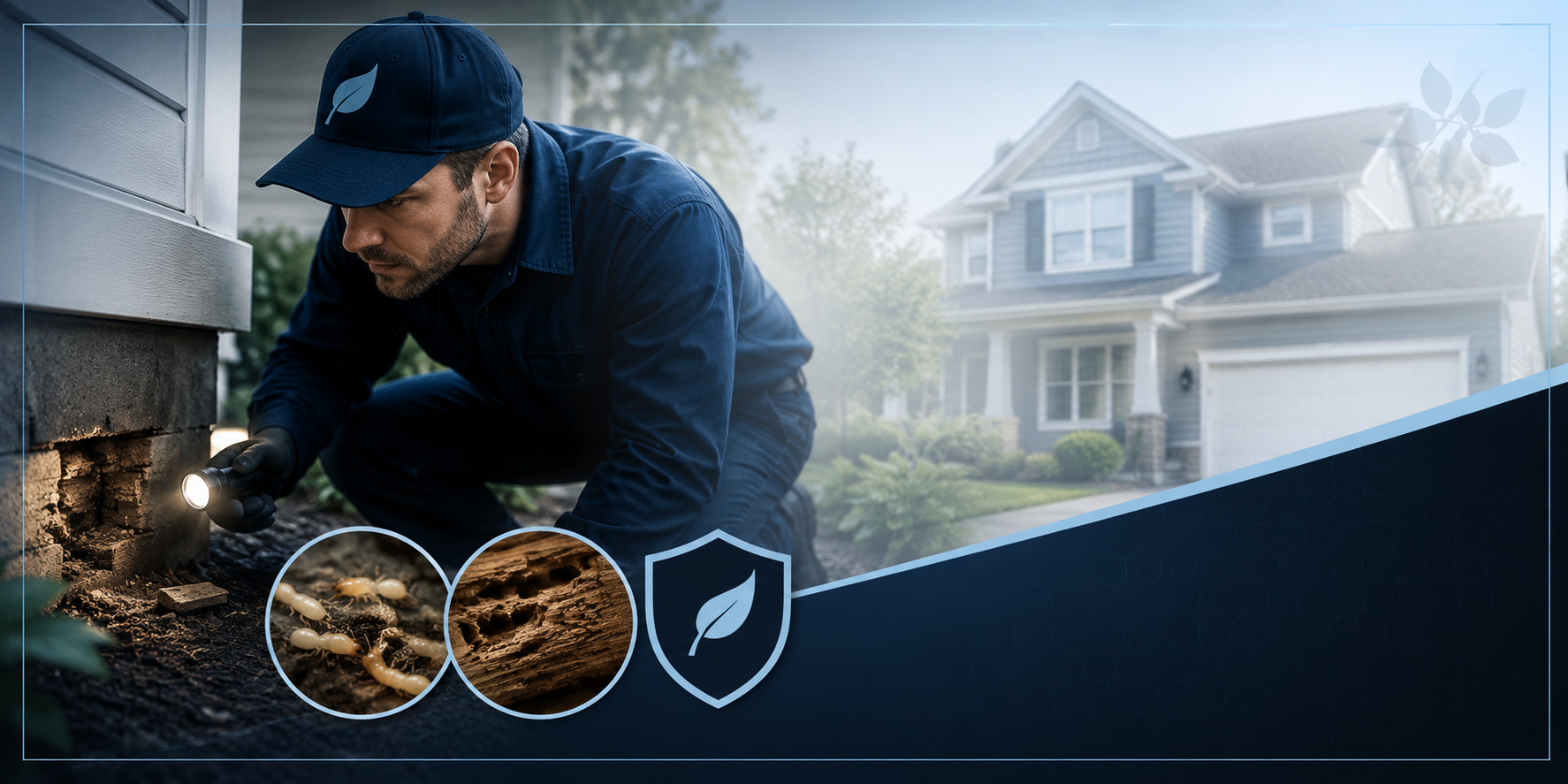
There is a particular kind of damage that never announces itself with a crash, a leak, or a smell. It builds quietly inside walls, beneath floors, and along structural beams for months, sometimes years, before it surfaces as something visibly wrong. That is the nature of termite damage. And that is exactly why a free termite inspection is one of the most valuable appointments a homeowner in the South can make, especially right now, as the season shifts and colonies begin their most active period of the year.
Spring and early summer represent the window when termite colonies are at their most visible and most dangerous. Mature colonies send out swarmers, looking to expand. New colonies establish themselves in soil near foundations. And the warm, humid conditions that Georgia and Tennessee homeowners know all too well create near-perfect conditions for termites to feed continuously. The moment you notice a sign, or decide to get ahead of the threat before one appears, is the moment to book a professional inspection. The fact that this inspection costs you nothing is not just a convenience. It is a genuinely compelling reason to stop putting it off.
This article breaks down exactly what a free termite inspection covers, what makes this time of year the right moment to schedule one, why homeowners across Georgia and Tennessee face elevated risk, and what an inspector actually finds that an untrained eye would miss entirely.
What a Free Termite Inspection Actually Covers
A professional termite inspection is not a quick walk-through with a flashlight. A licensed technician conducts a systematic examination of both the interior and exterior of your property, working through areas that most homeowners never think to check and would not know what to look for if they did.
The inspection typically covers:
• checking for mud tubes, which are the pencil-width tunnels subterranean termites build between the soil and your home's wood structure.
• high-humidity zones where termites often establish first contact with structural wood.
• drywood termites, in particular, target upper wood structures and can go undetected for years without a proper inspection of these areas.
•Termites often enter through gaps around these points and begin feeding inside the surrounding wood.
• anywhere a pipe or conduit passes through your foundation creates a potential entry path.
• porches, deck supports, fence posts, and wooden siding are common early targets.
Beyond identifying active infestations, a good inspector also flags conducive conditions: moisture problems, wood-to-soil contact, poor drainage, and ventilation issues that make your property more attractive to termites, even if none are present yet. That preventive insight alone makes a free termite inspection worth your time, regardless of what is found.
Why Right Now Is the Best Time to Schedule
Termites are biologically active throughout the year in the South, but the February through June window is when their behavior becomes most visible and most consequential for homeowners. This is when mature subterranean termite colonies, having fed quietly through the fall and winter, produce swarmers to expand their territory. It is also when soil temperatures and moisture levels reach the conditions that new colonies need to establish themselves close to your home.
For homeowners inAtlanta and across the Georgia metro, swarm season frequently begins as early as late February following a warm rain event. For properties in theNashville area and throughout Middle Tennessee, the peak window runs from March through May. In both regions, timing an inspection to coincide with the start of this active period means you are checking in right when an early-stage infestation would be easiest to catch and treat.
Termite inspections conducted in early spring allow professionals to detect both overwintering colony activity and newly establishing colonies, giving you the widest possible treatment window before structural damage advances.
Waiting until you see visible damage buckled flooring, hollow-sounding walls, doors that suddenly stick means the colony has already been at work for a significant period. An annual inspection, ideally timed to spring, interrupts that cycle.
The Regional Risk Picture: Georgia and Tennessee
Understanding why termite inspection Georgia Tennessee coverage matters so much requires a quick look at geography. Both states sit within what pest control professionals call the termite belt, a broad band of the American South where warm temperatures, seasonal rainfall, and humidity create conditions that allow termite colonies to remain active year-round without the deep freezes that limit colony growth in northern states.
Georgia's clay-heavy soil retains moisture well, giving subterranean termite colonies the damp environment they need to thrive just inches below the surface of most residential properties. Tennessee's combination of mild winters and humid summers creates comparable conditions, particularly in Middle Tennessee's suburban areas around Nashville, Franklin, Brentwood, and Murfreesboro, where rapid development has placed significant new housing stock directly in termite-rich soil.
The dominant species in both states are Eastern subterranean termites and Formosan termites. Eastern subterranean termites are the most widespread and typically swarm during daylight hours on warm, sunny days following rain. Formosan termites are more aggressive, capable of forming larger colonies that can consume structural wood at a significantly faster rate. Both species are present across the Atlanta and Nashville metro areas, and both require the same defense: regular, professional inspections.
It is worth noting that Georgia does not legally require a termite inspection for most residential property transfers, though many lenders require a clearance letter before financing closes. What this means in practice is that a large number of homeowners in the state are living in properties that have never had a systematic professional inspection.VerdX's residential pest control services exist specifically to change that exposure for Georgia and Tennessee homeowners.
What You Cannot See Without a Professional
The core argument for professional termite inspections, and for doing them on a regular annual schedule, comes down to a simple biological fact: termites are designed to stay hidden. Subterranean termites travel through sealed mud tubes. They feed from the inside of wood outward, leaving a thin surface layer intact until the damage is severe enough to cause collapse. Most colonies operate for months before producing any sign that a casual homeowner would recognize as a problem.
Licensed inspectors are trained to detect activity at stages that are invisible to an untrained eye. They know where to probe, what surface discoloration suggests moisture behind a wall, which micro-patterns in paint indicate termite presence below. Many use moisture meters to identify elevated readings inside wall cavities, pointing to conditions where termites are either already active or likely to establish. Some employ infrared imaging to detect heat signatures consistent with termite activity within structural voids.
A professional inspection also gives you documentation. For any homeowner considering a sale or refinancing, a clean inspection report is a tangible asset. For a buyer, it is protection against inheriting a costly, hidden problem.
Five Specific Situations When a Free Inspection Is Especially Critical
While every homeowner benefits from annual inspections, certain circumstances make the need more pressing:
• Many homeowners, particularly those who have owned their property for years without incident, have simply never had one done. That absence of history is not reassurance, it is a gap.
• Whether or not you identified them as termite swarmers, any appearance of winged insects near your foundation, windowsills, or interior light sources warrants professional confirmation immediately.
• Free termite inspection before listing gives sellers a clean record and removes a common deal-complicating discovery from the closing process. For buyers, it is straightforward protection.
• Leaky pipes, poor drainage, or a history of crawl space moisture places your property in a significantly higher-risk category and makes annual inspections a basic maintenance necessity rather than a precaution.
• Termite colonies can establish, grow, and begin causing structural damage within a single calendar year. Annual inspections are the minimum recommended interval for properties in high-risk regions like Georgia and Tennessee.
What Happens After the Inspection
A free inspection produces one of two outcomes, and both are useful. Either your home shows no signs of termite activity, and you leave with confirmation that your property is protected, along with the inspector's recommendations for reducing any conducive conditions identified during the walkthrough. Or the inspection reveals active termites, evidence of prior damage, or risk conditions that need attention, and you have the information you need to take targeted action before the problem grows.
VerdX Pest Control has licensed termite specialists on staff for inspections across the Atlanta metro and greater Nashville service areas. The company also offers termite warranties that provide ongoing protection once an inspection has been completed. If termites are found, the treatment plan is tailored to the specific infestation type and your property's profile. No pressure, no guesswork. Just a clear picture of where things stand and a defined path forward. You canschedule an inspection online orget a quote here the inspection itself costs you nothing.
The Cost of Waiting
Termites cause an estimated five billion dollars in property damage across the United States each year. Homeowners insurance, in the vast majority of cases, does not cover termite damage, which is classified as a preventable condition rather than a sudden, accidental loss. That places the full cost of repairs, which can run from several thousand dollars for localized damage to tens of thousands for structural repairs, directly on the homeowner.
The economics of this are straightforward. A free annual inspection costs you a single appointment and a small block of time. Early-stage termite treatment is substantially less expensive and less disruptive than treatment required once a colony is well-established. Structural wood repair is orders of magnitude more expensive than treatment alone. The earlier the detection, the lower the total cost of the problem.
For properties anywhere across the termite inspection Georgia Tennessee service corridor, this is not a theoretical risk, it is a region-specific reality that warrants a regular, professional response. The inspection is free. The information it gives you is not.
Do not wait for visible damage to prompt the call. Contact VerdX Pest Control today to schedule your free termite inspection across Atlanta, Nashville, and all surrounding service areas or request a free quote online right now. We provide residential pests control and commercial pests control for many different types of bugs and insects, including fleas, cockroaches, spiders, and ants.
